
Georgia Property Values on the Tax Card
One parcel, several values. A Georgia assessor card can carry a fair-market figure, an assessed figure, and more. Read each label for what it actually measures. The state generally assesses ordinary real property at 40 percent of fair-market value, unless another law applies, and that ratio is a tax rule rather than a price forecast for the property.
| Value Type | What It Means | Where It Is Recorded |
|---|---|---|
| Assessed value | Generally 40% of fair-market value for ordinary real property under Georgia law | County assessor card or annual assessment notice |
| Fair-market value | The assessor’s value estimate for tax purposes, tied to an arm’s-length cash sale definition | County assessment record or notice |
| Last sale price / consideration | Evidence of a past transfer, not today’s market value | PT-61 transfer-tax record, deed image, or local sales history where shown |
| Land and improvements | Separate component values when the local card reports them | County property card or assessment notice |
The Georgia DOR valuation rules set the standard. They define fair market value and the assessment level counties apply, though local notices sometimes use different labels. A special assessment law can change that relationship.
Georgia's 40 Percent Assessed Value
Myth check: 40 percent assessed value does not mean a property lost 60 percent of its market worth. Georgia's general rule works the other way. The assessor first estimates fair-market value, then applies a 40 percent level to most real property. Many tax records show both amounts.
DOR defines fair market value as the amount a knowledgeable buyer would pay and a willing seller would accept in an arm's-length sale. That tax standard is not a promise the parcel would sell for that figure, because condition, terms, and timing can move an actual deal.
Some parcels qualify for current-use or preferential values instead. Agricultural land gets different treatment. Keep any covenant label and tax year with the value.
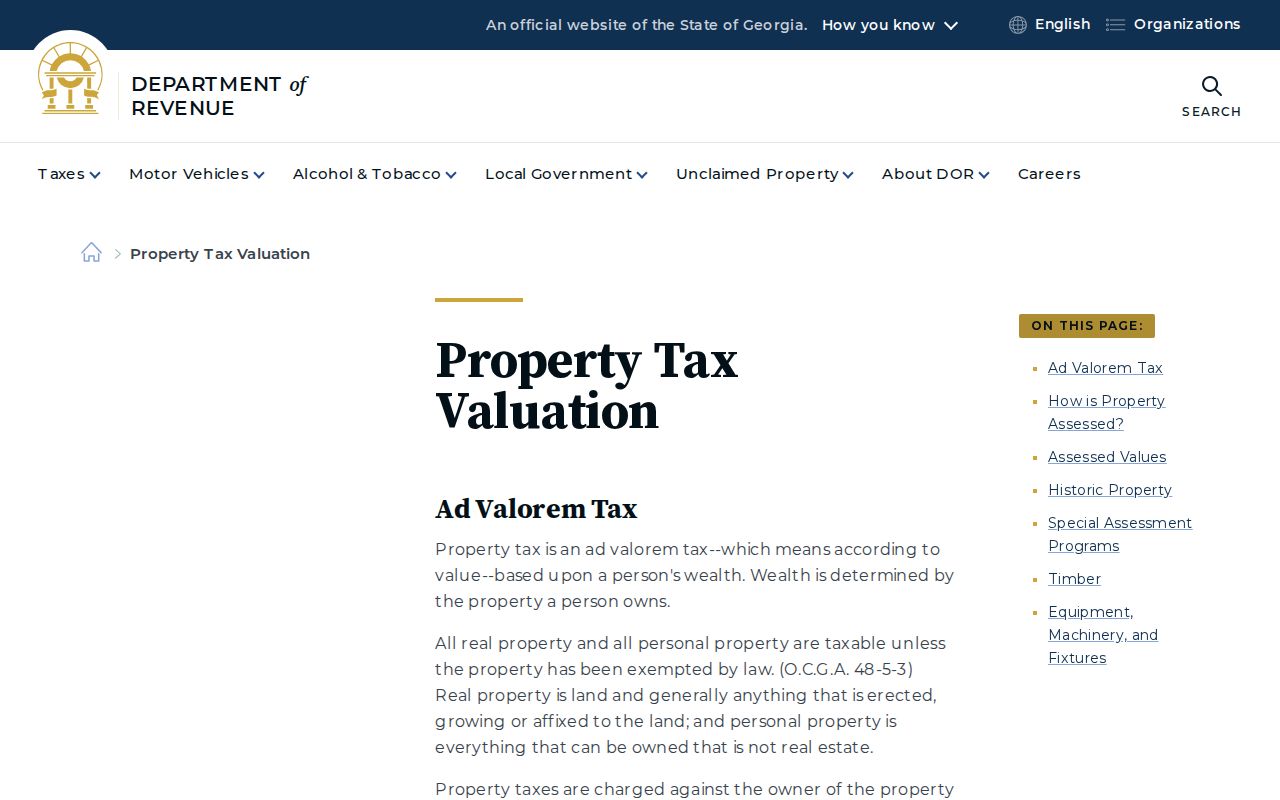
The DOR valuation page illustrates the statewide ratio with its own example. It explains the rule, not one specific Georgia parcel.
Use the county notice for a parcel’s own amounts and dates.
Georgia Assessor Fields Carry Different Dates
Most county assessor systems use a familiar set of fields, though the labels differ and some offer street searches while others do not. DOR's site links out to the local cards.
Match the county you pick, and copy its field name and parcel format exactly.
| Field Label | Type | Required | Options / Format Notes |
|---|---|---|---|
| Owner Name | Text | No | Common search field; syntax varies by county |
| Property Address / Location Address | Text | No | Street number, name, or municipality may be separate or combined |
| Parcel ID / Property ID / Account Number | Text | No | Copy the county’s full format, including punctuation or leading zeroes |
| Legal Description / Subdivision | Text or dropdown | No | Available in many cards; subdivision search varies |
| Search / Reset | Button | Not applicable | Common controls on local property systems |
A published county notice shows possible returned fields, not a statewide form:
| Notice Field | What It Identifies |
|---|---|
| Account number, property ID, acreage, tax district | Parcel and local tax-jurisdiction keys |
| Covenant year, homestead indicator, neighborhood code | Program and local classification fields for the stated tax year |
| Property description and address | Situs and property-identification text |
| Fair-market, returned, prior-year, current-year values | Value history and the proposed or recorded amount shown on the notice |
| Assessed value | The 40% level for ordinary real property, subject to other laws |
The county assessment notice example shows one field set. A local card may also split land and improvements or show exemptions and sales history. An assessment notice identifies a valuation record, not the deeded owner or the price of a later sale.
Keep the tax year and data date. Georgia values property as of January 1 each year and reviews values annually, but has no single full-revaluation schedule. DOR says update frequency varies with local conditions.
Deed, PT-61, sale, and assessor-update dates can differ. The Georgia property search route can locate a parcel record; keep each value tied to its source and tax year.
Looking Up Georgia Property Value Records
Georgia DOR keeps no statewide assessor database. Its Property Records Online directory routes visitors to county systems, where fields and online access vary from one county to the next. Pick the county where the land sits, then search by parcel number or situs address.
- Use the DOR directory or county facts map to select the parcel’s assessor system.
- Search its situs address or parcel ID; note value labels, owner field, year, and data date.
- Separate fair-market, assessed, prior-year, and land/improvement fields; retain exemption labels.
- Use recorded transfer evidence for a past sale price.
- Assessed value
- The amount produced by the assessment level applied to the county’s valuation.
- Fair-market value
- The assessor’s tax valuation under the state’s arm’s-length sale definition.
- Appraised value
- A separate valuation opinion prepared for a stated purpose and effective date; it is not the county assessment field.
- Assessment level
- The legal relationship between full value and the assessed amount, generally 40 percent for ordinary real property.
- Consideration
- Value reported in connection with a transfer; it is a historical transaction fact.
- Reassessment
- A change to the valuation record; Georgia counties review property annually but do not share one full-revaluation cycle.
No card online? Call or visit the county assessor. DOR's county facts page lists local contacts. You can ask in person or by phone. A written request by mail or email works better, since it can name the parcel and the years you want.
Ask for an existing card and notice. An agency need not build a new report. Agencies generally respond within three business days or give an estimate, citing any exemption if more time is needed. Search and redaction charges may apply after the first 15 minutes. Confirm county copy or electronic rates directly. The Attorney General's Open Records Act guidance walks through the request steps.
Georgia Sale Prices Record Past Transfers
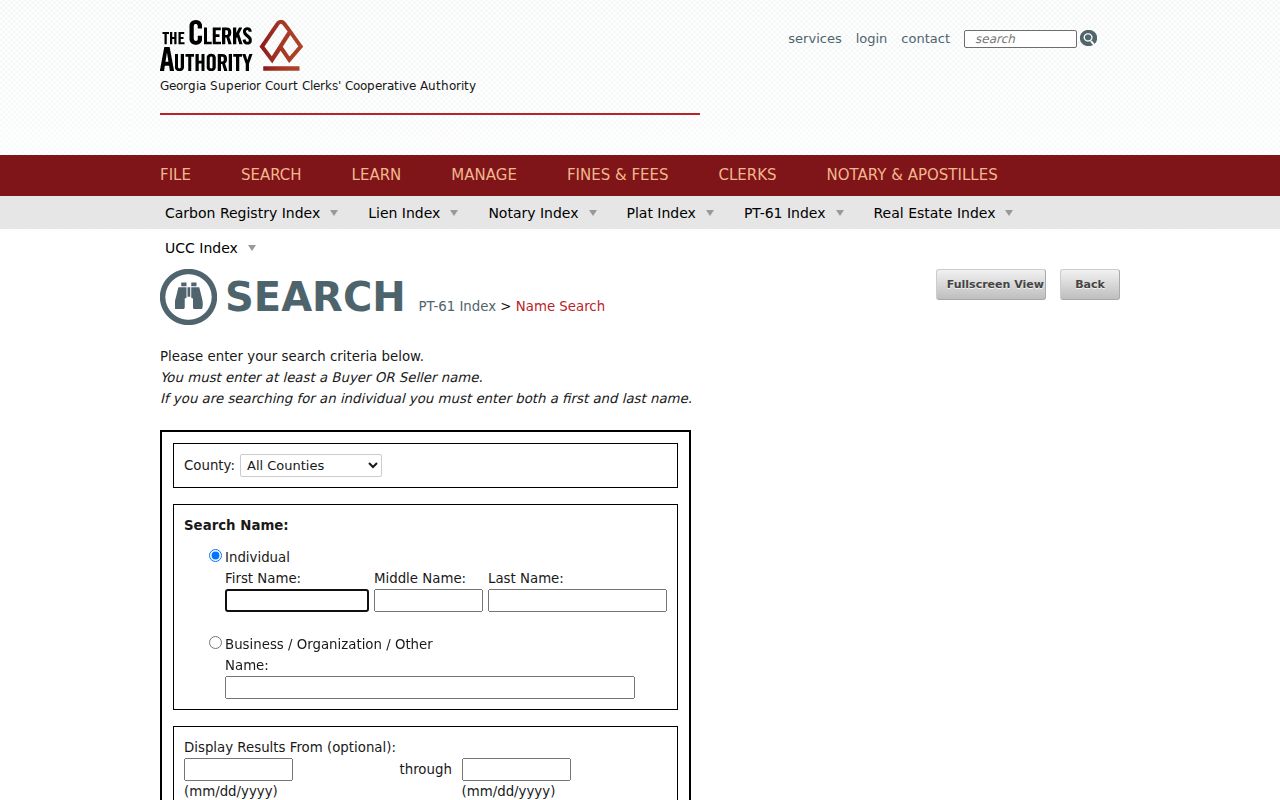
A sale price describes a past transfer, not today's worth. In Georgia, the PT-61 filing captures transfer information. The deed itself carries the conveyance and the legal description. The GSCCCA PT-61 name form lets you search by buyer or seller across counties and date ranges. Its optional address and map tools carry separate access rules and participation limits. Plan around them.
Some assessor cards include a sales-history summary. Detail varies by county. Always pair the consideration figure with the transfer record's date. When dates appear, keep execution, recording, transfer-tax, sale, and assessor-update dates separate. Each answers a different question about the same deed. A deed image can also fill in details that a search summary leaves out. The Georgia GSCCCA Real Estate Index locates parties and book/page references, not a current appraisal or certified copy. So the three sources may show different dates for one transaction. Remember that past consideration offers context only. It does not describe current market conditions for the parcel.
Georgia Property Value Shifts with Exemptions
Exemptions and special assessment programs can push taxable value away from assessed value. A homestead flag attaches to a tax year. Georgia's Department of Revenue ties it to ownership and legal-residence use on January 1. It does not depend on proof of who occupies the home today. Other programs rely on base-year, agricultural, conservation, historic, forest, or current-use values instead. Georgia's HB 581 changes, effective for tax years beginning January 1, 2025, created a statewide floating, inflation-related base-year homestead framework. Local governments can adopt or decline that framework. Check the year and the local exemption status before comparing one parcel across time. The DOR homestead information and the 2025 legislative summary explain how the change works. County bills, payment status, exemption details, and assessment disputes call for a closer look. Turn to Georgia property tax records.
Georgia Value and the 2026 Tax Court
Current records context: Georgia's Tax Court opened July 1, 2026 for certain state tax disputes. DOR says it leaves ordinary county ad valorem cases out. The assessor's local value records stay put. A new court name changes none of that work.
The DOR Tax Court description lists the scope. Any value on a Georgia county card still reflects its stated tax year and assessor source.
What Georgia Assessed Value Cannot Tell You
A Georgia assessed value is not a price tag. It will not tell you what a buyer would pay today. It is a tax figure. State standards and local assessor work shape it. The market of the moment does not. Treat a recorded sale price as dated evidence, not a forecast. A GIS line on a parcel map proves nothing about acreage, condition, or value.
Put the numbers side by side. Compare full-value and assessed fields against the tax year. Check the exemption label and the transfer dates, too. Match legal descriptions, too, before you lean on a sale as context. For a purchase, an estate, or financing, get a valuation built for that purpose. Do not lean on the public tax roll figure.
Value versus price. Georgia’s assessed value is a tax measure, not an offer, sale price, or current appraisal. Use the county record to understand the figure and keep its tax year attached.