
Georgia Property Tax Records by Field
Two offices divide the work in Georgia. The Board of Tax Assessors keeps the parcel card, the assessment, exemptions, and the annual notice. The Tax Commissioner or Tax Receiver sends bills, takes payments, and handles delinquency and tax-sale questions. One county page may link both. Match the question to the office. Start in the parcel's county, and keep the card's tax year beside the bill's payment date.
| Field | What It Shows | Where to Check |
|---|---|---|
| Parcel and situs | Property ID, legal description, and physical address, where published | County assessor card |
| Fair-market and assessed values | 100% value fields and the 40% assessed level used in Georgia's system | Assessor notice or card |
| Exemptions and covenant | Homestead or other status flags and the tax year they cover | Assessor or local exemption office |
| Bill and payment status | Current charge, amount paid, balance, and due date | County Tax Commissioner or Receiver |
| Delinquency or tax sale | Unpaid tax status, local sale notice, or redemption record | Tax Commissioner and county records |
A card value is not a sale price. A payment record does not prove title. Georgia property tax records and tax bills answer different questions. The parcel number links the card to the bill. Compare the tax year on each. Georgia has no one statewide tax-bill portal. The official county link is part of the lookup.
Georgia Property Tax Office Roles
The state Department of Revenue runs no statewide parcel database. Its Property Records Online directory routes visitors out to county systems. Some counties publish nothing online, DOR warns. The directory itself just gathers official county assessor links. Follow the link for the county where the land sits, not the mailing city. Assessors set values. They answer assessment questions. The Tax Commissioner handles the bills, receipts, payment status, and delinquency work. DOR's county tax-facts map lists local officials, returns, exemptions, and appeal information. A shared county site merges nothing. Across Georgia's 159 counties, assessor search forms differ in labels and modes; once a result appears, the parcel ID is the best key.
| Search Field | How It Helps | Statewide Limit |
|---|---|---|
| Owner name | Finds a card by person or entity name | Syntax and field label vary |
| Property address | Starts a situs or location search | Street search is not guaranteed |
| Parcel or account ID | Opens a known parcel record | Format is county-specific |
| Legal description or subdivision | Connects a card to a plat or lot | May be text or a local menu |
| Map and print links | Opens a GIS view or card copy | Availability and charges vary |
Find a Georgia Property Tax Bill
Assessment and billing sit in different offices. A tax bill always comes from the local collector. Use the DOR directory to find the county, then follow its Tax Commissioner or Tax Receiver link. The DOR property-tax FAQ draws the same line. A county portal may ask for a parcel, an account number, or a situs address.
- Locate the county from the physical property address, then open its official assessor link.
- Record the parcel ID and tax year shown on the property card or assessment notice.
- Open the county Tax Commissioner or Receiver site and use that parcel or account key to reach the bill.
- Read the charge, due date, payment status, and any delinquency or sale notice as separate fields.
Use the office named on the bill. The usual due date is December 20 unless changed locally, so confirm the date on the bill. If the parcel key fails, call the county office for the payment-system account number. An assessed value is not a balance owed.
- Assessed value
- Georgia generally uses 40% of fair-market value as the assessment level; exemptions can affect taxable value.
- Mill rate or levy
- The local tax rate used with taxable value to set a bill; the district and adopted rate are local.
- Homestead exemption
- A property-tax reduction with state and local rules; the status belongs to a tax year.
- Tax lien or execution
- A public claim tied to unpaid taxes; a release or redemption record must be checked with the responsible office.
Georgia Property Tax Assessment Notice
A published Georgia assessor notice sample shows what one parcel's notice contains: account and property IDs, acreage, tax district, covenant year, homestead indicator, property description, neighborhood code, and situs address. It is an assessor document. It is not a deed. Read its fields beside the card's tax year and the parcel's legal description.
- Fair-market value at 100%, returned value, and previous, current, or other value fields.
- Assessed value at 40%, with prior and current values when listed.
- Tax district, covenant year, and homestead indicator.
- Assessment appeal instructions, contact details, and the available review paths.
Notice formats vary by county. One assessor's labels set no statewide standard. DOR's valuation explanation defines fair-market value and the assessment level, while the county notice shows one parcel's fields, so keep the notice with its year when comparing later values.
Georgia Property Tax Values: Market, Assessed, Taxable
A Georgia property tax record can show several values at once: fair-market, returned, assessed, and taxable after exemptions. They do not mean the same thing. DOR defines fair-market value as the property's value in the relevant market. The ordinary assessment level is 40 percent. Local exemptions or a special assessment can lower the taxable base without changing what a buyer might pay. Read each value name as printed. Land and improvement amounts may be listed separately. Prior and current columns explain notice changes. The bill applies local rates and district charges to taxable value. It is not a second market appraisal. A recent deed or transfer-tax entry can show a past sale, but its consideration is not today's market value. The Georgia property-value lookup compares these figures without mixing the bill into the sale record, and the Georgia DOR valuation explanation spells out the fair-market versus assessed distinction.
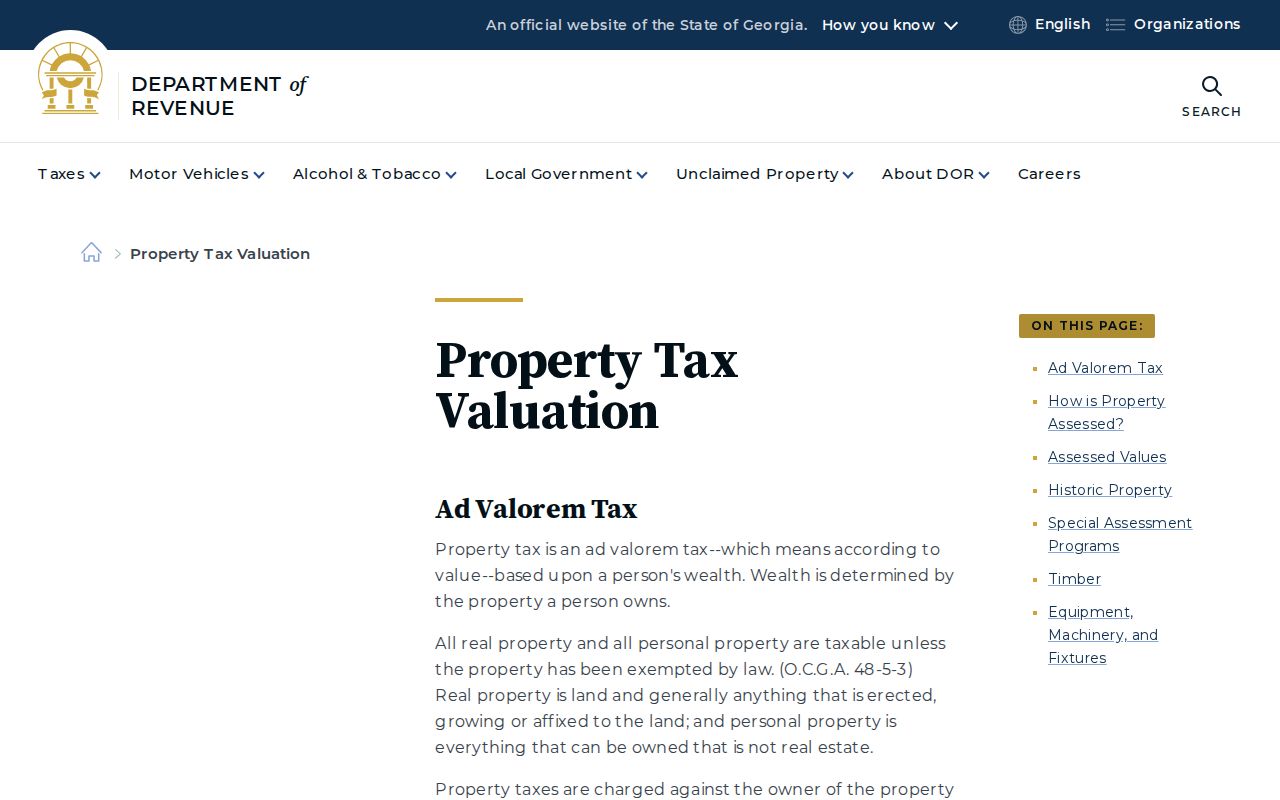
The statewide example explains the rule. Use the county notice for the parcel's own amounts and tax year. Not every property card shows sales history. When a sale date or consideration matters, the GSCCCA PT-61 name form routes buyer or seller searches by county and date range.
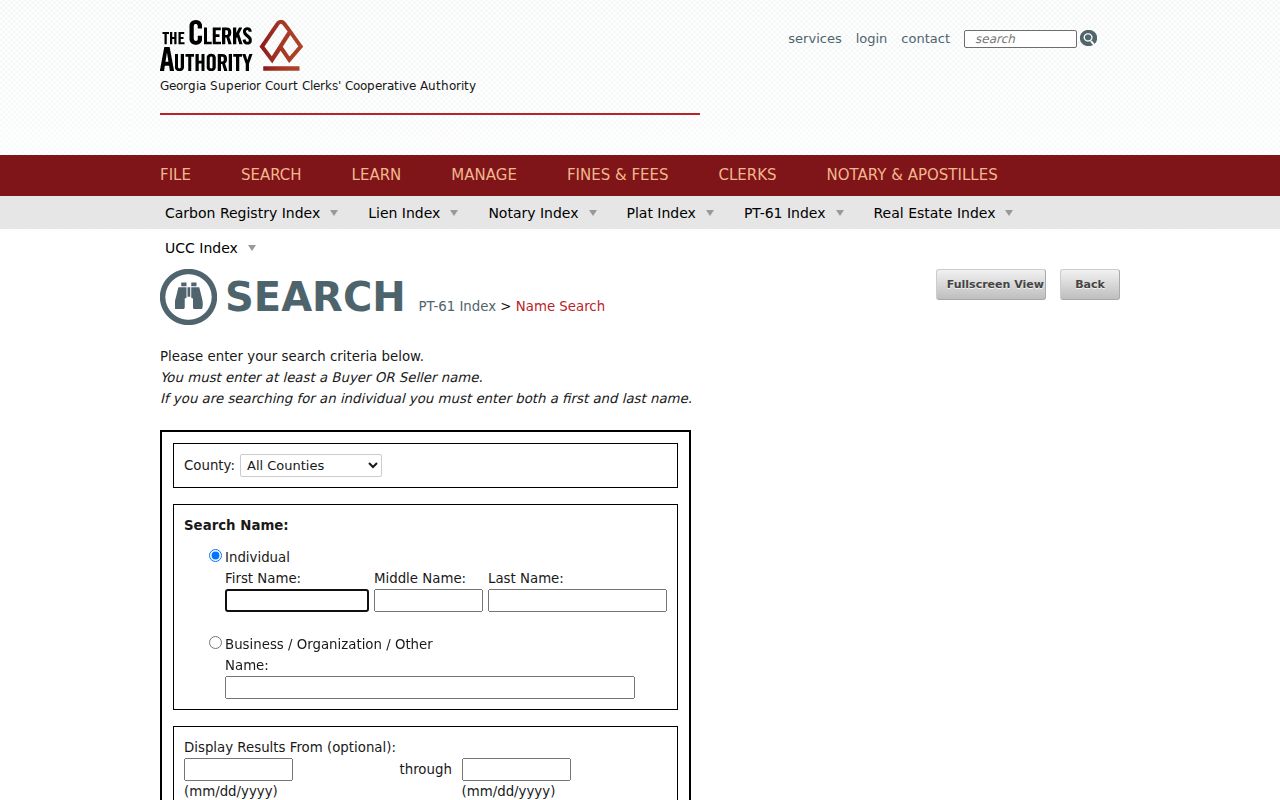
The transfer-tax index is its own layer of sale evidence. The assessor's field data and the Tax Commissioner's balance each answer different questions about a parcel.
Georgia Property Tax Sales Stay Local
The Tax Commissioner handles delinquent property tax records locally. Ask that office about tax-sale lists and redemption. Georgia keeps no statewide county tax-sale list. Requests work best with a parcel or account number, a tax year, notice date, sale date, or legal description. Notice dates matter. Always ask whether a sale is pending. Ask also whether a redemption has been recorded. A tax-sale deed and its redemption status sit apart from any clean current-title finding.
DOR explains that property can be levied and sold for unpaid taxes, even when ownership changes during the tax year. The January 1 owner-liability rule makes the tax year and the named taxpayer matter when an old balance appears. A county portal may show a bill yet omit the legal notices or the redemption record, so consult the tax office and the county clerk as needed.
Georgia Homestead Flags by Tax Year
DOR sets the standard homestead test. The homeowner must own and occupy the home as a legal residence on January 1 of the tax year. Filing is generally due by April 1. Current rules allow some applications later, through the 45-day assessment appeal window in specific circumstances. A homestead flag is year-specific evidence of an exemption claim. It does not guarantee who occupies the home today.
The official DOR homestead page describes state and local exemptions, recent floating and base-year material, and filing rules. Its screenshot highlights the January 1 and April 1 dates that matter when reading a card.
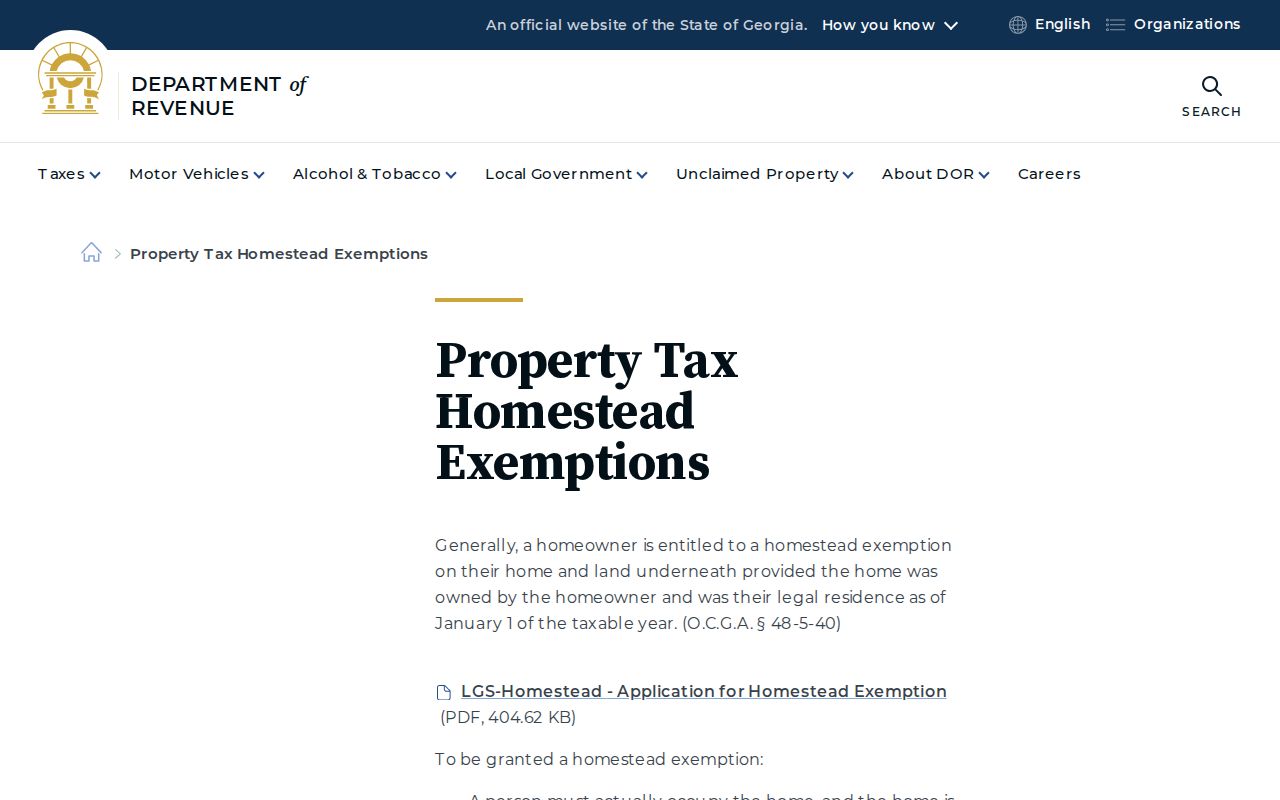
Georgia's HB 581 framework applies to tax years beginning January 1, 2025. Local choices and opt-outs shape it. HB 92 changed notice and bill provisions, including base-year homestead notices and some 45-day applications. Compare taxable values only after checking local notices. The flag is no title field.
Georgia County Tax Records Without a Portal
DOR's directory routes visitors to county systems. It promises no online card or bill search. When a card is missing, call or visit the Board of Tax Assessors for the existing card, map, or notice. For balances, ask the Tax Commissioner or Receiver. The state property-tax FAQ confirms that online availability varies.
A written request should identify the county, address, parcel ID, tax year, and the existing record. Request an electronic copy if one is maintained. The Georgia Open Records Act, O.C.G.A. §§ 50-18-70 through 50-18-77, generally requires a response within three business days. Otherwise the agency estimates production and cites an exemption. It need not create a new summary.
The Georgia Attorney General's Open Records request instructions explain how to describe records, and its fee FAQ covers search and copy charges. Search, retrieval, and redaction labor is free for the first 15 minutes, and copying is generally capped at $0.25 per page under Attorney General guidance. Confirm the current schedule with the custodian.
For older tax digests, try local historical rooms, public libraries, and Georgia Archives. The Archives' county-record guidance points to tax records beginning about 1872. Earlier records sit on microfilm. District and acreage may replace parcel numbers.
Georgia Tax Court Has a Different Scope
Georgia's new Tax Court opened July 1, 2026. It is not the route for an ordinary county ad valorem assessment appeal. DOR describes the court as handling state tax disputes, including certain official assessments and state tax executions. County appeals follow the paths on the notice, such as the Board of Equalization, a hearing officer, arbitration, and then Superior Court where available.
The DOR Tax Court page identifies its scope. State liens and executions differ from county assessments. Start with the county notice. Follow the appeal route printed there. An ordinary county value appeal does not go to the Tax Court.
Appeal a Georgia Assessment Within 45 Days
Start an appeal with the notice for that parcel and tax year. Check its date, instructions, property description, value fields, and contact details. DOR's forms page includes PT-311A, Appeal of Assessment. The notice shows the review route. It may be a Board of Equalization. It may be a hearing officer, or arbitration.
The DOR assessment and property-tax forms page provides the state forms. Use the county's instructions for filing. The screenshot shows the appeal form alongside the other local property-tax filings.
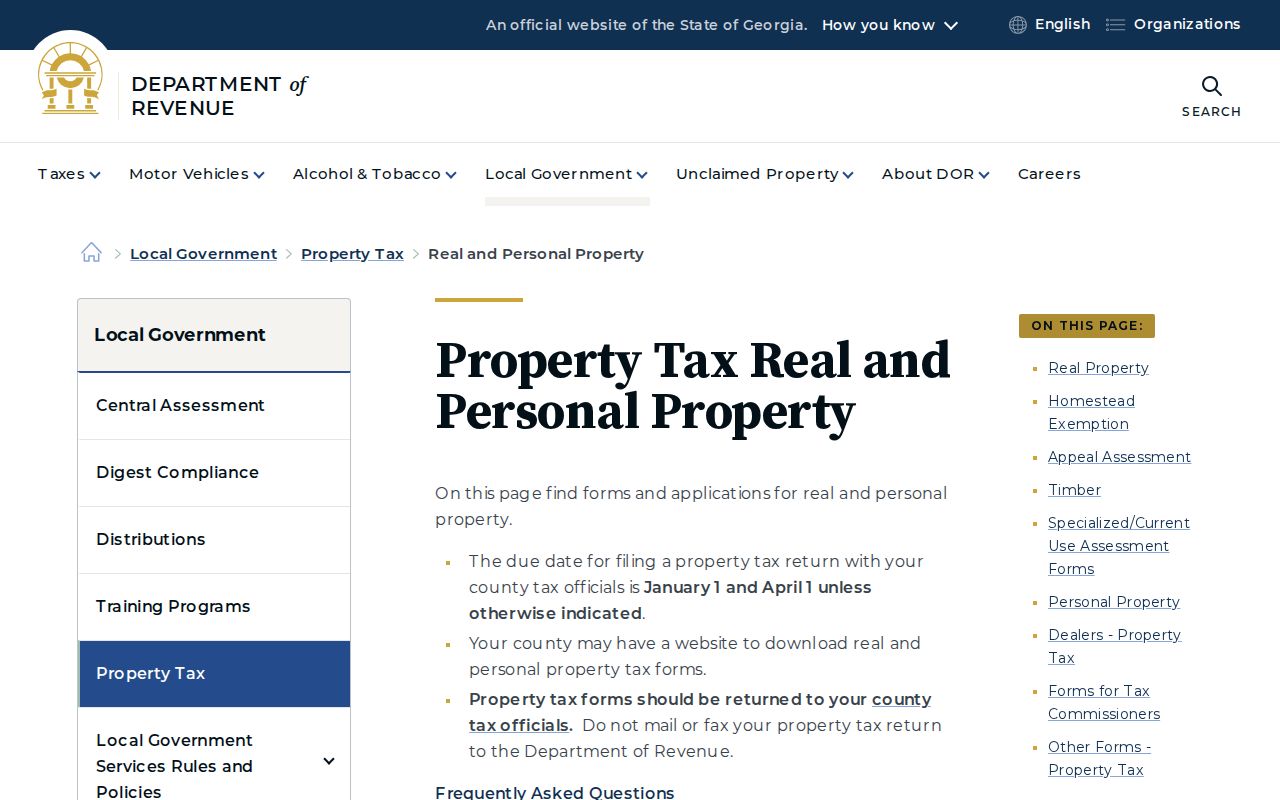
The 45-day period runs from the notice date. Keep the date, parcel ID, and comparables together. File with the office and method stated on the notice, since a missed window can limit review of that year's value.
Appeal deadline. Georgia owners generally have 45 days to appeal an assessment. Use the deadline and filing instructions printed on the county notice, because the notice is tied to that parcel and tax year.